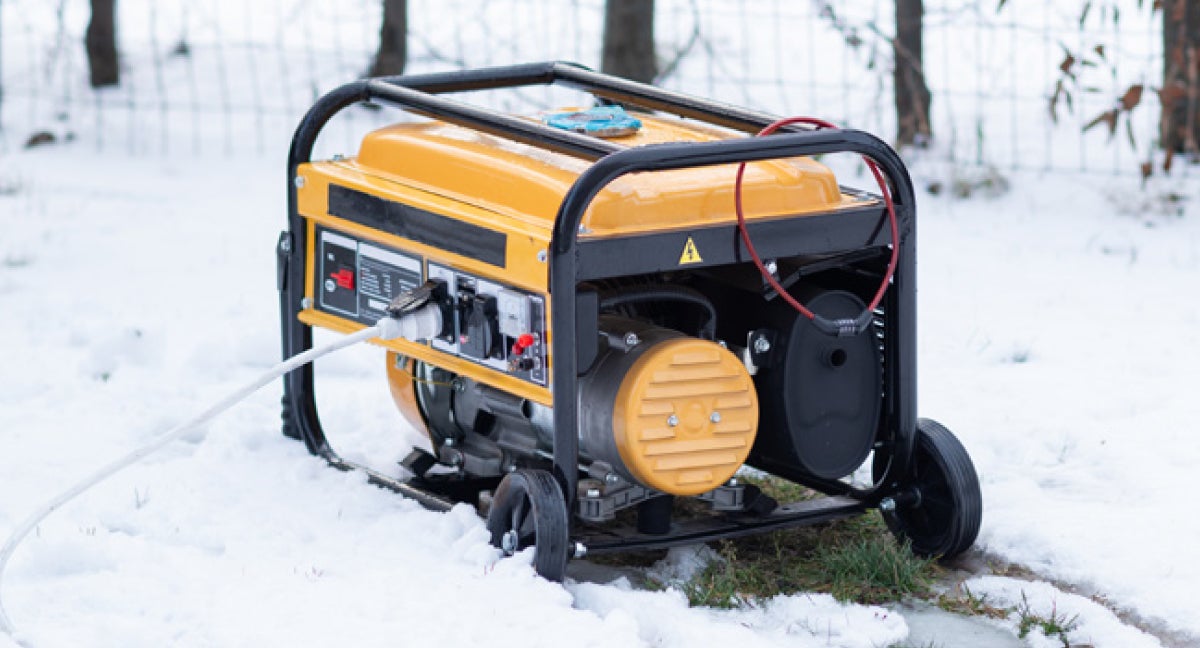
Know These Generator Risks Before the Next Storm
Risk 1: Carbon Monoxide Poisoning
Keep generators outdoors away from doors, windows, and vents. Position the exhaust away from your home and locate the generator downwind.
Risk 2: Electric Shock & Overloading
Do not use a generator in rainy or wet conditions, and do not handle it with wet hands.
Ensure the generator is sized appropriately for the total electrical load you want it to handle.
Risk 3: Fire & Fuel Hazards
Store extra fuel in an ANSI-approved container in a cool, well-ventilated place away from fuel-burning appliances. Before refueling your generator, turn it off and let it cool.
Risk 4: Backfeeding
Never connect a generator directly to your home’s electrical system unless it’s installed by a qualified electrician using a properly installed transfer switch. Backfeeding can put utility workers and others at serious risk of electric shock.
Risk 5: Improper Connections
Plug appliances directly into the generator using heavy-duty, outdoor-rated extension cords. Make sure cords are in good condition and rated for the electrical load.
- Log in to post comments